

Written & reviewed by SEO expert & professional consultant Oscar Scolding , with over 10 years of experience consulting for brands such as GITEX, Amazon, The Mountain Company & more.
I do not offer guaranteed SEO rankings. Ever.
No consultant or agency controls Google, your competitors, algorithm updates or the result shown to every individual searcher. I can research an opportunity, improve the website, prioritise the work and measure whether it generates business. I cannot honestly promise that Google will place one page in one fixed position for a particular query.
Google’s own guidance on hiring an SEO is unusually direct. If a provider guarantees that its changes will deliver first place, Google advises you to find someone else.
Ranking guarantees continue because certainty is easy to sell. It sounds more reassuring than a forecast with assumptions and risks. Unfortunately, confidence is not the same as control.
A ranking guarantee promises something the provider does not own
An SEO ranking guarantee assumes the provider can control the final decision made by Google’s ranking systems. They cannot.
As an SEO consultant in Dubai, I can improve technical accessibility, content, authority, user experience and relevance. However, Google decides which results appear, competitors keep working and search results keep changing.
I would rather give a client an honest assessment. A forecast can consider demand, competition, website performance and resources. A guarantee usually ignores at least one of them.
Guaranteed rankings are often built around worthless searches
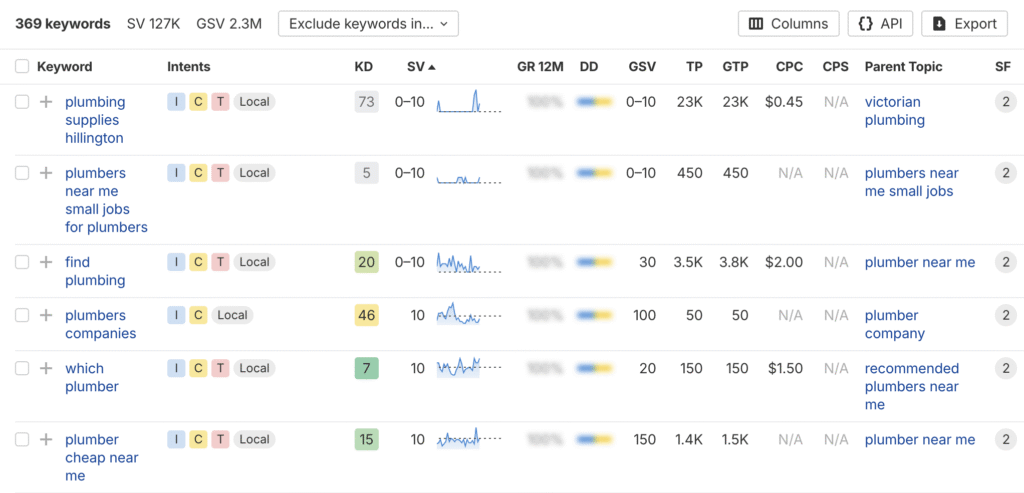
One of the easiest ways to manufacture guaranteed Google rankings is to choose an extremely long, specific query with little or no search demand.
The provider can report a number-one position for a phrase nobody types. Technically, the promise may have been fulfilled. Commercially, nothing happened. A trophy for winning a race nobody entered is still a trophy, but I would not build a budget around it.
Long-tail or zero-search-volume keywords are not automatically useless. Tools do not capture every query, and a low-volume phrase with buying intent can generate a valuable customer. The problem is choosing it because it is easy rather than commercially relevant.
Before accepting a first-page ranking guarantee, ask which terms are covered, what evidence shows demand and how they connect to customers. If the keywords appear after signing, the guarantee has plenty of room to become creative.
Search results are more volatile than a guarantee suggests
SERP volatility means rankings can move as Google updates its systems, competitors change their pages and different result features appear. Google’s public ranking history records repeated core and spam updates. Each can change how websites are assessed and displayed.
Competition creates movement too. Another business may improve its service pages, earn relevant coverage or strengthen its local presence. A position is not reserved because an agency included it in a proposal.
Search pages also contain maps, shopping results, videos and AI-generated experiences. “Number one” can mean different things depending on what is measured.
This does not make SEO random. It means performance should be assessed across a useful market rather than reduced to one permanent number.
Each search result can be different
Personalised Google search results make a universal ranking promise even less credible. Google explains that some results can be tailored using account information and activity. It also notes that results may differ because of language settings or localisation, even when personalisation is not involved.
Personalisation does not affect every result, but two people can search the same words and see a different order. Location particularly matters for Dubai businesses serving specific areas.
A ranking screenshot proves what appeared for one searcher, device, place and moment. It does not represent every potential customer.
Even Google Search Console reports an average position across the impressions recorded for a website. Google’s explanation of impressions, position and clicks is a useful reminder that “position” is a measurement with context, not a fixed seat with your company name attached.
Macro data matters more than micro ranking movements
I track rankings, but I do not let the daily movement of one query control the strategy. Macro trends provide a more useful view.
Good SEO performance metrics include relevant visibility, landing-page clicks, engagement, conversions, qualified enquiries and sales. I want to know whether more of the right market is taking action.
One query falling from position three to four matters little if the wider group generates more clicks and conversions. A number-one ranking is not impressive when it produces no visitors.
My guide to the free SEO tools I use explains how I combine Search Console, analytics and user-behaviour data rather than treating a rank tracker as the final judge.
Revenue matters more than a ranking
Revenue is a stronger outcome than the position of an individual keyword. Before enough revenue data exists, engagement and conversions help show whether the traffic is moving in the right commercial direction.
For lead generation, look beyond forms to qualified enquiries, close rates and customers. For ecommerce, connect organic visits with transactions, margins and repeat purchases.
This is why lead-generation SEO and conversion rate optimisation belong in the same conversation. Ranking a page is useful. Turning the right visitor into revenue is the actual job.
ROI still matters because revenue without enough profit can hide an expensive acquisition channel. The point is that commercial outcomes should carry more weight than small ranking changes.
How to recognise the red flag
The clearest SEO red flags appear when a provider promises a precise position by a precise date before understanding the business. Be cautious if they do not ask about customers, margins, services, previous performance or the condition of the website.
Look closely when the keywords, location, device or measurement tool remain undefined. A refund does not return the months spent pursuing searches with no value.
Guarantees can also encourage shortcuts. Bulk links, copied pages and tactics designed to manipulate rankings may produce movement before they produce a problem. I have covered those risks in my guide to the most common SEO mistakes Dubai businesses make.
Choose evidence over certainty
Good SEO should improve visibility, engagement, conversions and revenue across the searches that matter to the business. Rankings are part of that evidence, but they are not a result anyone can honestly guarantee.
Choose a provider who explains the opportunity, limitations, priorities and measurement. It sounds less exciting than “number one in 30 days”, but is more likely to survive contact with reality.
If you want a commercially focused assessment without impossible ranking promises, book a consultation and I can help you understand what is realistic, what deserves priority and how success should be measured.